USDT Frozen by Tether: Complete Recovery Guide (2026)
Disclosure: This article may contain affiliate links. We earn a commission at no extra cost to you. Our editorial policy ensures all recommendations are based on genuine analysis.
USDT frozen by Tether affects more than 7,268 addresses — totaling over $3.3 billion in frozen funds since 2023. Circle, the issuer of USDC, has frozen only $109 million across 372 addresses in the same period — roughly 30 times less by value. If your funds land on the wrong list, the recovery path is long, expensive, and succeeds only about 6% of the time, according to AMLBot’s 2025 report.
In January 2026 alone, Tether froze $182 million in USDT across five TRON wallets at the request of law enforcement. In April 2025, Bulgarian police triggered a freeze of $44.72 million across eight wallets — prompting Texas-based Riverstone Consultancy to file a federal lawsuit in the Southern District of New York (Case 1:25-cv-08454, October 2025) alleging procedural violations. The lawsuit remains active as of early 2026.
This guide explains how centralized stablecoin issuers actually freeze funds, why your legitimately-purchased USDT can be caught in the net, the realistic recovery process, and the protective strategies most holders do not know about.
What you will learn:
- How Tether’s and Circle’s smart-contract-level freeze mechanisms work
- Why “legitimate” crypto can become blacklisted retroactively (AML taint drift)
- The official Tether/Circle unfreeze process and realistic timelines
- How to screen an address for AML risk before you receive funds
- Protective strategies: chain diversification, stablecoin alternatives, self-custody
- Why 99% of “unfreeze services” are scams and how to spot them
Intermediate
How Tether’s Freeze Mechanism Actually Works
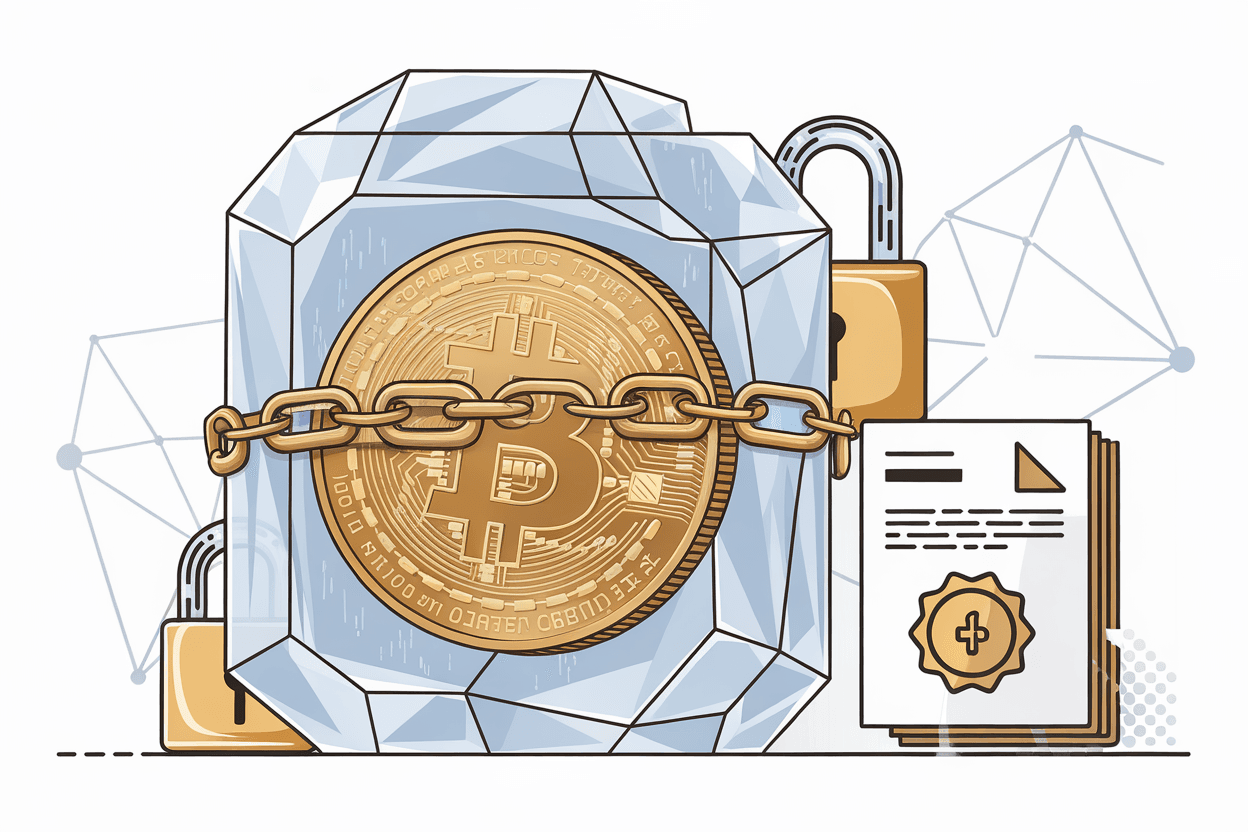
USDT is not a decentralized token. On every blockchain where it exists — Ethereum, Tron, Solana, BSC, Polygon — the USDT smart contract includes an administrative function that lets Tether Limited freeze any address. On Ethereum, the function is called addBlackList(). On Tron, it is typically addBlackListAddress(). The effect is the same: the frozen address cannot send, swap, or bridge its USDT. The balance is visible but untouchable.
Here is what the two mechanisms look like in practice:
| Action | Effect | Who Can Do It |
|---|---|---|
| addBlackList(address) | Wallet-wide freeze — no USDT can leave | Tether owner key only |
| destroyBlackFunds(address) | Permanently burns the frozen USDT | Tether owner key only |
| removeBlackList(address) | Unfreeze (extremely rare — ~6.4% of cases) | Tether owner key only |
Every freeze and unfreeze is visible on-chain. You can verify any blacklisting tx on Etherscan (Ethereum) or Tronscan (Tron) by searching the USDT contract and filtering for addBlackList events.
Important distinction: Tether’s blacklist freezes the entire wallet. This is different from an exchange freezing your account (which is a Terms-of-Service action you can appeal to the exchange). An issuer-level freeze is baked into the token itself — no exchange, DEX, or wallet app can bypass it.
USDT vs USDC: The Freeze Gap in Numbers
If you care about custody risk, the numbers tell a clear story:
| Metric (2023-2025) | USDT (Tether) | USDC (Circle) | Ratio |
|---|---|---|---|
| Total frozen (USD value) | $3.3B | $109M | 30x more |
| Addresses blacklisted | 7,268 | 372 | 20x more |
| Addresses unblocked later | 330 | ~20 (est.) | — |
| Recovery success rate | ~6.4% | ~5.4% (est.) | similar |
Source: AMLBot Stablecoin Freezes 2023-2025 Report. The gap is not because Tether is reckless — it is because Tether processes far more volume and receives far more law enforcement requests. But if you hold large sums, the risk profile matters. Our USDT vs USDC comparison covers the remittance use-case; this article covers the custody-risk dimension they do not address.

Why Your Funds Get Frozen — The Real Triggers
Tether and Circle do not freeze wallets randomly. Every freeze traces back to one of five categories:
- OFAC and sanctions compliance — The US Treasury’s SDN list forces compliance. When an address appears on the SDN list, US-regulated entities must freeze. Tether is technically Hong Kong/El Salvador-registered but honors most OFAC requests.
- Law enforcement requests — DOJ, FBI, Thai CCIB, Vietnamese cybersecurity units, Bulgarian police (the April 2025 $44.72M case), and many others submit formal requests. Tether publishes its Law Enforcement Request Policy on its website.
- Court orders — Direct judicial orders from jurisdictions where Tether has exposure.
- Exchange hacks and protocol exploits — When stolen funds are identified on-chain, exchanges and protocols petition Tether to freeze the proceeds. This is how the $182M January 2026 freeze on five TRON wallets happened.
- Proximity to flagged addresses — The most insidious category. If your wallet received funds from an address later flagged as criminal, your wallet can be frozen even though you did nothing wrong. This is the “AML taint drift” problem.
The retroactive problem: Crypto that was completely legitimate when you received it can become “dirty” months later if the source wallet is linked to a crime investigation after the fact. You have no way to know at the time of receiving. This is why AML screening of incoming addresses matters even for law-abiding users.
Historical note — Tornado Cash: In August 2022, OFAC sanctioned the Tornado Cash mixer and all its smart contract addresses. Circle immediately blacklisted 38 addresses and froze roughly $75,000 in USDC. In November 2024, the Fifth Circuit Court of Appeals ruled that OFAC lacked statutory authority over smart contracts. On March 21, 2025, the US Treasury formally delisted Tornado Cash. Circle unblocked the addresses. This precedent matters: sanctioned-addresses policies can be reversed, but the process takes years and the funds remain frozen throughout.

The Official Unfreeze Process
If your USDT gets frozen, here is the realistic path forward — based on Tether’s published policy and documented cases:
- Confirm the freeze — Check the blacklisting tx on Etherscan/Tronscan. Identify which wallet is frozen and the exact amount.
- Identify the reason if possible — If law enforcement requested the freeze, contact the agency directly (the freeze notification may name the jurisdiction). If it is proximity-based (you received funds from a later-flagged address), skip to step 3.
- Submit an unfreeze request through Tether — Use tether.to/contact or the compliance email listed in their Legal section. Expect to provide:
- Full KYC identification
- Source of funds (SoF) documentation — bank statements, exchange trade history, salary records
- Transaction history explaining how you received the frozen USDT
- Any business context (if it is a business wallet)
- Legal declaration of no wrongdoing
- Wait — realistically — Simple cases (clear-cut proximity freezes with strong documentation) resolve in weeks to a few months. Cases involving active law enforcement investigations commonly take 1-3 years. The AMLBot data showing only 330 addresses unblocked out of 5,131 freezes (~6.4%) reflects how hard this path is.
- Legal representation — For amounts over ~$50,000 or cases involving active investigations, hire a crypto-literate lawyer. Jurisdictions with the most established case law include Singapore, Switzerland, the UK, and the US. For smaller amounts, the legal fees often exceed the frozen funds.
Circle’s USDC unfreeze process is similar but runs through circle.com/contact. Circle tends to respond faster to clear-cut proximity cases because their volume is lower.
How to Screen an Address for AML Risk (Before You Receive)
The best freeze is the one that never happens. Before accepting large USDT transfers — especially in P2P trades, remittances, or business payments — screen the sender’s address.
| Tool | Access | Use Case | Notes |
|---|---|---|---|
| Chainalysis Reactor | Enterprise | Forensic-grade investigation | Used by major exchanges and law enforcement |
| AMLBot | Consumer tier available | Address risk score 0-100% | Reasonably priced for individuals; above/below 50% threshold |
| MistTrack | Free tier | Basic taint check | Good for quick verification |
| Bitrace | Free tier | TRON focus | Strong for TRC-20 USDT |
| Breadcrumbs | Free tier | Visual transaction graphs | Useful for understanding fund flows |
The paid plan adds detailed source-of-funds tracing, which matters for anything above $1,000.
Practical workflow for P2P sellers receiving USDT:
- Ask the counterparty for the exact sending address before trading
- Run it through AMLBot (free tier for small volume, paid for serious volume)
- Risk score above 50% → refuse the trade or require a different address
- For amounts above $10,000, always screen. Our P2P Safety Guide covers counterparty verification
The “Unfreeze Service” Scam — 99% Are Fraud
Within hours of a freeze, victims are contacted by “specialists” claiming they can unfreeze the funds for a fee (typically 10-30% of the frozen amount). According to forum analysis on exploit.in and numerous documented cases, 99% of these services are scams. Common patterns:
- Pay the fee, hear nothing back — Pure exit scam
- Request additional “processing” or “compliance” fees — Victim pays repeatedly, never sees funds
- Forge documents to submit to Tether — This fails (Tether’s compliance team is experienced) and can expose the victim to additional legal liability
- Phishing for additional wallets — Claim they need to “verify” access to other wallets, then drain those too
Red flags to watch for:
- Contacts you via Telegram or Discord DMs within hours of freeze
- Claims “insider” connections at Tether
- Demands upfront payment in crypto
- Cannot produce any verifiable past success case with proof
- Promises guaranteed unfreeze — Tether itself does not guarantee this
The only legitimate path is direct contact with Tether Compliance and, if needed, a licensed crypto attorney. Combined with our Crypto Scams Guide, this should keep you out of the secondary-victim category.
Protective Strategies
You cannot eliminate issuer-freeze risk entirely when holding USDT or USDC — but you can reduce exposure:
1. Chain Diversification
Do not hold all your USDT on one network. If Tether freezes your Ethereum address, your TRC-20 USDT on a different wallet is unaffected. The same applies to Solana USDT, BSC USDT, Polygon USDT — each lives on a separate contract.
2. Stablecoin Diversification
Holding part of your stablecoin allocation in DAI (or similar decentralized options) avoids centralized freeze risk entirely. DAI cannot be frozen at the token level because there is no admin key. Note: DAI has quietly become less decentralized as MakerDAO migrates liquidity to USDS (which does have freeze capability), so verify the current state before relying on this. For deeper analysis of stablecoin risk, see our stablecoins guide.
3. Self-Custody Over Exchange Custody
Keeping USDT on an exchange means both exchange-level and issuer-level freeze risk stack. Self-custody removes the exchange layer. Our crypto wallet guide covers the custody spectrum, and our security guide covers the basics of wallet hygiene.
4. Non-Freezable Alternatives for Specific Use Cases
For transfers where issuer freeze is unacceptable (activists, journalists in hostile regimes, censorship-resistance needs), Bitcoin, Ethereum native ETH, and privacy coins like Monero cannot be frozen at the token layer. They have other trade-offs — volatility (see our stablecoin vs Bitcoin analysis) or regulatory friction — but the freeze vector is eliminated.
5. Address Hygiene
Rotate receiving addresses. For business wallets, do not use the same address for years. Use fresh addresses for major transactions. This makes retroactive taint drift less likely to hit your primary holdings.
Real Cases: 2025-2026 Timeline
| Date | Event | Scale | Status |
|---|---|---|---|
| April 4, 2025 | Bulgarian police request — Tether freezes 8 wallets | $44.72M | Subject of Riverstone lawsuit |
| March 21, 2025 | US Treasury delists Tornado Cash sanctions | ~$75K USDC unblocked | Historic reversal |
| October 2025 | Riverstone Consultancy sues Tether (Case 1:25-cv-08454, SDNY) | Multiple claims | Pending as of 2026 |
| January 2026 | Tether freezes 5 TRON wallets (law enforcement) | $182M | Largest single-event freeze to date |
The trend is clear: freeze events are growing in size and frequency. Any serious crypto holder should treat issuer-level freeze as a real custody risk, not a theoretical edge case.
Common Mistakes to Avoid
- Mistake 1: Accepting P2P USDT without AML screening — the #1 cause of retroactive freezes on individual wallets
- Mistake 2: Paying “unfreeze services” — 99% are scams. Go direct to Tether or Circle
- Mistake 3: Keeping all stablecoin holdings in USDT on one chain — diversify networks and issuers
- Mistake 4: Ignoring the freeze risk on exchanges — exchange custody stacks risk layers
- Mistake 5: Assuming “legitimate” funds cannot be frozen — AML taint drift means proximity to flagged addresses is enough
Frequently Asked Questions
Can Tether really freeze my USDT if I bought it legally?
Yes. If the USDT you purchased originated from an address that law enforcement later flags, or if your address receives funds from a flagged source, Tether can freeze your wallet. This is why AML screening of incoming addresses matters for everyone — not just people in regulated industries.
What is the difference between Tether freezing my wallet and an exchange freezing my account?
An exchange freeze is a Terms-of-Service action you can appeal — the exchange has the discretion. An issuer freeze (Tether’s addBlackList) is a smart-contract-level action that no exchange, DEX, or wallet can bypass. The funds are visible on-chain but completely untransferable. Only Tether can unfreeze them.
How long does the unfreeze process take?
Simple proximity freezes with strong SoF documentation can resolve in weeks to a few months. Cases involving active law enforcement investigations typically take 1-3 years. The overall success rate, based on AMLBot’s analysis of 5,131 freeze cases, is approximately 6.4%. For small amounts (under ~$10,000), the legal and compliance costs often exceed the frozen funds.
Is USDC really safer than USDT from freeze risk?
Statistically, yes — Circle has frozen 30x less value across 20x fewer addresses in the same period. However, USDC uses the same smart-contract freeze mechanism, and Circle complies with OFAC sanctions and law enforcement requests. If you want freeze-proof stablecoins, look at truly decentralized options (DAI — with caveats — or algorithmic alternatives), not just a different centralized issuer.
Should I report to Tether if I receive USDT I suspect is “dirty”?
This is a judgment call. If you receive clearly stolen funds (e.g., from a known hack), reporting to Tether protects you from being treated as a secondary participant. However, Tether may freeze the funds regardless. If you accept the USDT knowingly and later resell it, you expose yourself to criminal liability. When in doubt, refund to sender if possible, or consult a crypto-literate lawyer.
Continue Learning
Security Cluster:
- Protect Your Crypto: 10 Security Rules Every Holder Needs
- Crypto Scams in 2026: 7 Types That Stole $14 Billion Last Year
- P2P Crypto Trading: 7 Scam Types and How to Stay Safe
- Best Crypto Wallets 2026: Hot vs Cold, Custodial vs Self-Custody
Stablecoin Context:
- What Are Stablecoins? USDT, USDC, DAI Explained
- USDT vs USDC: Which Stablecoin Is Best for Remittances?
- Stablecoin vs Bitcoin for Sending Money
Related:

Editorial pen name · ChainGain
Alex Mercer is the editorial pen name used for ChainGain’s cryptocurrency education content. Articles are based on cited sources and reproducible comparisons. Editorial profile
Disclaimer: This article is for informational purposes only and does not constitute legal, financial, or tax advice. Cryptocurrency regulations and issuer freeze policies evolve rapidly; always verify current processes directly with Tether (tether.to) or Circle (circle.com) before acting on a freeze. For significant amounts or active freeze situations, consult a licensed attorney with crypto expertise. Sources: AMLBot Stablecoin Freezes Report, Tether Law Enforcement Request Policy, US Treasury Tornado Cash Delisting, CoinDesk January 2026 Freeze Coverage.