
Published: 6 Apr. 2026 · 16 min read · Difficulty: Beginner
I’ve been sending money to the Philippines every month for the past two years — first through Western Union, then Remitly, and now crypto. The cheapest way to send money to Philippines in 2026 depends on how fast you need it and whether your recipient uses GCash. After testing every major service with my own money, I can tell you that the cost difference between the cheapest and most expensive option is staggering — we’re talking 0.58% vs. 10%+ of every transfer.
The Philippines is one of the world’s largest remittance markets, with over $35 billion flowing in annually from overseas Filipino workers. Whether you’re an OFW in Saudi Arabia, a freelancer in the US, or supporting family from Singapore, you deserve to keep more of your hard-earned money. In this guide, I compare nine different methods — from traditional services like MoneyGram and Remitly to crypto options like Coins.ph and Binance P2P — with real fees, real transfer times, and a step-by-step walkthrough for the cheapest route.
Philippines Remittances in 2026 — The Numbers
Before diving into options, let’s understand the scale of money flowing into the Philippines and why fees matter so much.
According to the Bangko Sentral ng Pilipinas (BSP), the Philippines received a record $35.63 billion in remittances in 2025 — a 3.3% increase from the previous year. An estimated 2.2 million Overseas Filipino Workers (OFWs) regularly send money home to support families, pay for education, and invest in property.
The top source countries for Philippine remittances in 2025 were:
- United States — 39.7% of total inflows
- Singapore — 7.3%
- Saudi Arabia — 6.6%
- Japan — 5.0%
- United Kingdom — 4.6%
- UAE, Canada, Hong Kong, Qatar, South Korea — remaining share
The World Bank’s Remittance Prices Worldwide database shows that the average cost of sending $200 from the US to the Philippines ranges from 3.6% to 5.34% depending on the service. That’s better than the global average of 6.2%, but still well above the UN Sustainable Development Goal target of under 3%.
For someone sending $300 per month, the difference between a 5% fee and a 0.5% fee is $162 per year — enough to cover a month’s grocery bill in Manila. For a detailed breakdown of costs across all major corridors, see our Complete Guide to Crypto Remittance Costs (2026).
All Your Options Compared
Here’s the complete comparison table I built from my own testing and current published rates (as of April 2026). All costs are calculated for a $200 transfer from the US to the Philippines:
| Method | Fee ($200) | Total Cost % | Speed | Receives Via |
|---|---|---|---|---|
| MoneyGram (mobile wallet) | ~$1.16 | 0.58% | Minutes | GCash / Maya |
| Remitly (economy) | $0 | ~1–2% FX | 3–5 days | GCash / bank |
| Remitly (express) | $3.99 | ~3% | Minutes | GCash / bank |
| Wise | ~$8.12 | 4.06% | 1–2 days | Bank |
| Western Union | ~$10.68 | 5.34% | Minutes | Agent / GCash |
| Xoom (PayPal) | ~$15.52 | 7.76% | 1–3 days | Bank / agent |
| Crypto (Coins.ph USDC) | ~$1–3 | 0.5–1.5% | Minutes | GCash / bank |
| Crypto (Binance P2P) | ~$1–2 | 0.5–2% | 15–30 min | GCash / Maya / bank |
| Bank wire (SWIFT) | $25–50+ | 10%+ | 3–5 days | Bank only |
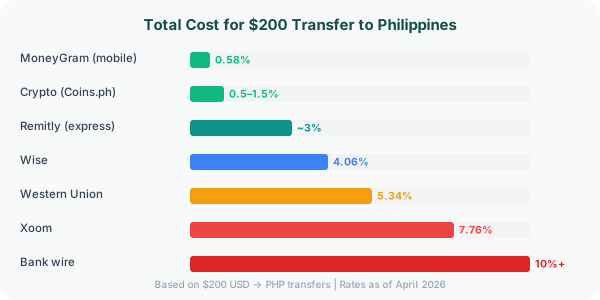
Surprise: MoneyGram to a mobile wallet is actually the cheapest traditional option at just 0.58% total cost. But if you’re willing to use crypto, Coins.ph and Binance P2P can beat even that — especially for larger amounts.
Let’s dig into each option so you can decide which one fits your situation.
The Traditional Winners
MoneyGram — Cheapest for Mobile Wallet Delivery
MoneyGram surprised me. When I first compared services in 2024, it wasn’t even on my radar for the Philippines. But their mobile wallet delivery to GCash and Maya has become the cheapest traditional method available.
- Total cost for $200: ~$1.16 (0.58%) including FX markup
- Speed: Minutes to GCash/Maya; same-day for bank deposits
- How to send: MoneyGram app, website, or 480,000+ agent locations worldwide
- Receive options: GCash, Maya, bank deposit, cash pickup at Cebuana Lhuillier and M Lhuillier
- Best for: One-time or occasional senders who want low fees without crypto
The catch? MoneyGram’s exchange rate markup varies by corridor and payment method. For debit card funding to GCash, fees are minimal. For credit card or cash-to-cash, costs jump significantly. Always check the total amount your recipient will receive before confirming.
Remitly — Best for GCash Users
Remitly is probably the most popular app-based option among OFW families, and for good reason. Their direct GCash integration means your recipient can have cash in their e-wallet within minutes.
- Economy tier: $0 transfer fee, but 3–5 business day delivery, exchange rate includes a 1–2% markup
- Express tier: $3.99 fee, delivery in minutes to GCash, ~3% total cost
- Direct GCash/Maya integration: No crypto knowledge needed, no extra steps
- Coins.ph partnership (2026): Remitly has partnered with Coins.ph to offer crypto-backed transfers for select corridors
- First-time promo: New users often get $0 fees + better exchange rates on their first transfer
In my experience, Remitly’s exchange rate on the Economy tier is worse than what you’d get from Wise, but the zero transfer fee makes up for it on smaller amounts under $300. For amounts over $500, Wise or crypto usually wins.
Wise — Best Exchange Rate
Wise (formerly TransferWise) is the gold standard for transparent pricing. They use the mid-market exchange rate — the real rate you see on Google — and charge a clear 0.57% fee on top.
- Total cost for $200: ~$8.12 (4.06%) — includes fee + minimal FX spread
- Speed: 1–2 business days to Philippine bank accounts
- Delivery: Bank deposit only (BDO, BPI, UnionBank, etc.)
- Best for: Larger transfers ($500+) where the superior exchange rate saves more than the flat fee costs
At $200, Wise isn’t the cheapest option because the fee is a larger percentage of the transfer. But once you’re sending $500 or more, the mid-market rate advantage starts to outweigh MoneyGram’s lower fee. On a $1,000 transfer, Wise typically beats every traditional competitor except MoneyGram mobile.
Western Union — Most Accessible (But Expensive)
Western Union remains the go-to for cash pickup, especially in rural areas of the Philippines where GCash adoption is still growing.
- Total cost for $200: ~$10.68 (5.34%) — one of the most expensive options
- Speed: Minutes for cash pickup; same-day for GCash
- Agent locations: Available at pawnshops, malls, and sari-sari stores across the Philippines
- GCash delivery available: But fees are higher than MoneyGram for the same service
I only recommend Western Union if your recipient specifically needs cash pickup in a location where other services aren’t available. For everything else, MoneyGram or Remitly delivers the same speed at lower cost. For a deeper comparison, see our Crypto vs. Western Union Fees breakdown.
The Crypto Option — For Tech-Savvy Senders
Here’s where things get interesting. If you or your recipient are comfortable with basic crypto, you can cut costs to under 1.5% — and sometimes under 1%. The Philippines has a uniquely strong crypto infrastructure thanks to Coins.ph, which bridges the gap between crypto and local payment systems like GCash.
Coins.ph — Zero Trading Fees for USDT/USDC
Coins.ph is a BSP-licensed virtual currency exchange and one of the most popular financial apps in the Philippines with over 18 million registered users. It’s the key that makes crypto remittances practical for the Philippines.
- 0% trading fees for USDT/PHP and USDC/PHP pairs on Coins Pro
- Direct withdrawal to GCash, Maya, and bank accounts
- Total cost: ~0.5–1.5% (network fee to send crypto + minimal spread on conversion)
- BSP-regulated: Licensed as a Virtual Currency Exchange under BSP Circular 944
- Supports: BTC, ETH, USDT, USDC, XRP, and 50+ other tokens
Coins.ph is my go-to for Philippines transfers now. The zero trading fee on stablecoins means the only costs are the network fee to send USDT/USDC to Coins.ph (about $1 on TRON) and a tiny spread when converting to PHP. On a $500 transfer, total cost comes out to roughly 0.5–0.8% — far cheaper than any traditional service.
For a broader look at how stablecoins work for remittances, check out our Stablecoin Remittances Explained guide.
Binance P2P — Lowest Spread
Binance P2P offers a different approach: instead of selling to an exchange, you trade directly with a buyer in the Philippines who pays via GCash, Maya, or bank transfer.
- Zero-fee P2P trading on Binance’s platform
- USDT/PHP pairs with hundreds of active traders
- Payment methods: GCash, Maya, BDO, BPI, UnionBank, and more
- Total cost: ~0.5–2% depending on the spread between market rate and P2P offers
- Speed: 15–30 minutes (includes escrow and payment confirmation)
The downside of Binance P2P is that it requires more knowledge and comfort with crypto trading. You need to manage escrow, verify payments, and handle disputes if they arise. For regular senders who want a set-and-forget option, Coins.ph is simpler. But for those comfortable with the process, Binance P2P can occasionally offer the absolute best rates.
Step-by-Step: Send via Crypto to GCash
Here’s the exact process I use to send money to the Philippines via crypto. Total time: about 10–15 minutes once you’re set up.
- Buy USDT on any exchange (Binance, Bybit, Kraken, or even a P2P platform). If you already hold USDT or USDC, skip this step.
- Send USDT to your recipient’s Coins.ph wallet. Choose the TRON (TRC-20) network — it costs roughly $1 and confirms in under a minute. Avoid Ethereum (ERC-20) unless you want to pay $3–5+ in gas.
- Recipient sells USDT for PHP on Coins Pro. Open Coins Pro (inside the Coins.ph app), select USDT/PHP, and sell at market price. Trading fee: 0%.
- Withdraw PHP to GCash. In Coins.ph, tap Cash Out → GCash. Transfer is instant and costs a minimal fee (usually PHP 10–25).
- Recipient spends via GCash. With 94 million GCash users in the Philippines, they can pay bills, buy groceries, transfer to bank accounts, or withdraw cash at 7-Eleven and partner ATMs.
Pro tip: If your recipient isn’t tech-savvy, set up the Coins.ph account together on a video call the first time. After that, they just need to check their Coins.ph app, tap “Sell,” and cash out to GCash — three taps total.
For detailed instructions on sending USDT across borders, see our How to Send USDT Abroad guide. And for a comparison of blockchain networks and their fees, check out Best Blockchain for Sending Money.
Philippines Payment Ecosystem
To understand why certain methods work better than others, you need to know the Philippine payment landscape. Here’s a snapshot of the key platforms your recipient might use:
| Platform | Users | Type | Crypto Support |
|---|---|---|---|
| GCash | 94M | E-wallet | Via Coins.ph |
| Maya | 8M+ | E-wallet | Direct crypto |
| BDO | — | Bank | SWIFT only |
| BPI | — | Bank | SWIFT only |
| Cebuana Lhuillier | — | Agent | Cash pickup |
| M Lhuillier | — | Agent | Cash pickup |
| 7-Eleven | — | Agent | Send only (Palawan) |
Key insight: GCash dominates the Philippines with 94 million registered users — in a country of 115 million. If your recipient has a smartphone, they almost certainly have GCash. This makes GCash-compatible services (MoneyGram, Remitly, Coins.ph) the most practical choices.
Maya (formerly PayMaya) is growing fast, especially among younger users. It offers direct crypto buying and selling, which makes it an alternative to Coins.ph for crypto-to-peso conversion. However, its user base is still about 10x smaller than GCash.
For rural areas without reliable internet, cash pickup through Cebuana Lhuillier and M Lhuillier remains essential. These pawnshop-based agents have thousands of branches across the Philippines, reaching towns that even banks don’t serve.
Tax and Regulation
Understanding the regulatory environment helps you avoid surprises. Here’s what you need to know about sending money to the Philippines in 2026:
Philippines Crypto Regulation
- Crypto gains tax: The Philippines imposes a capital gains tax of up to 15% on cryptocurrency profits. However, receiving crypto as a remittance and immediately converting to PHP is generally not considered a taxable gain (you’re not profiting, just converting).
- SEC CASP framework (MC 4 & 5, July 2025): The Securities and Exchange Commission now requires all Crypto Asset Service Providers to register under the new framework. Coins.ph and other licensed platforms are compliant.
- BSP oversight: The Bangko Sentral ng Pilipinas oversees all remittance companies and e-money issuers, including GCash and Maya.
- ASEAN Nexus payment rail: Targeted for launch by July 2026, this cross-border payment system aims to reduce corridor fees to under 3% between ASEAN nations. If successful, it could reshape the remittance landscape for the Philippines, Singapore, Thailand, and other member states.
For Senders
- Remittances are not taxed in the Philippines. Inbound remittances are exempt from Philippine income tax under the Tax Code.
- Sender-side taxes depend on your country. In the US, sending money abroad is not a taxable event. In some countries, large transfers may trigger reporting requirements.
- Anti-money laundering: Transfers above PHP 500,000 (~$8,800) require additional documentation under Philippine AML rules. For typical remittance amounts ($100–$1,000), this isn’t a concern.
Note: Tax laws change frequently. Consult a qualified tax professional for advice specific to your situation.
Which Method Is Right for You?
After testing all of these options, here’s my decision guide based on what actually matters:
Cheapest overall: Crypto via Coins.ph (0.5–1.5%) or MoneyGram mobile wallet (0.58%). If you or your recipient can handle basic crypto, Coins.ph wins on larger amounts. For simplicity without crypto, MoneyGram to GCash is unbeatable.
Easiest for beginners: Remitly to GCash (free economy tier). Download the app, enter GCash number, send. No crypto, no complexity. The 1–2% FX markup is the cost of convenience.
Fastest delivery: MoneyGram or Remitly Express — both deliver to GCash in minutes. Crypto via Coins.ph is similarly fast once the USDT arrives (1–3 minutes on TRON).
Best for large amounts ($500+): Wise for traditional, Coins.ph for crypto. Wise’s mid-market rate advantage grows with larger transfers. Coins.ph’s zero trading fee means even $5,000 transfers cost under $10 in total fees.
Cash pickup needed: Western Union or agent networks (Cebuana Lhuillier, M Lhuillier). More expensive, but essential for recipients without smartphones or e-wallets.
My personal setup: I use Coins.ph for monthly transfers (lowest total cost) and keep Remitly as a backup for situations where my recipient needs money instantly and can’t access their Coins.ph app.
Frequently Asked Questions
What’s the cheapest way to send $200 to the Philippines?
For traditional services, MoneyGram to GCash/Maya costs just 0.58% (~$1.16 on $200). For crypto, sending USDT via TRON to Coins.ph and converting to PHP costs approximately 0.5–1.5% ($1–3). Both are significantly cheaper than Western Union (5.34%) or bank wires (10%+).
Can I send money directly to GCash from abroad?
Yes. Several services support direct GCash delivery: Remitly, MoneyGram, Western Union, Coins.ph (via crypto), and Worldremit. Remitly and MoneyGram offer the best rates for GCash delivery. Your recipient just needs a verified GCash account linked to their Philippine mobile number.
Is it cheaper to send crypto or use Remitly?
For amounts under $200, Remitly Economy (free fee, 1–2% FX markup) and crypto via Coins.ph (0.5–1.5%) are similar. For amounts above $300, crypto is almost always cheaper because the network fee ($1) becomes a smaller percentage. On a $1,000 transfer, crypto costs ~$5–10 total vs. $20–30 for Remitly Express.
How long does it take to send money to the Philippines?
It depends on the method: Minutes — MoneyGram (to GCash), Remitly Express, crypto (Coins.ph/TRON). 1–2 days — Wise (bank deposit). 3–5 days — Remitly Economy, bank wire (SWIFT). 15–30 minutes — Binance P2P (includes escrow process).
Do I need to pay tax on remittances to the Philippines?
No — inbound remittances are not taxed in the Philippines. Recipients do not pay income tax on money received from abroad. However, senders should check their own country’s tax rules. In most countries, sending money to family is not a taxable event, but large transfers may trigger reporting requirements. Crypto gains (if you profit from holding before sending) may be subject to capital gains tax in your jurisdiction.
Continue Learning
This article is part of our remittance cluster. Explore related guides to find the best way to send money internationally:
- Complete Guide to Crypto Remittance Costs (2026) — Full cost breakdown across 10+ corridors
- Stablecoin Remittances Explained: How USDT/USDC Replace Wire Transfers
- Best Blockchain for Sending Money (2026) — TRON vs. Stellar vs. Solana vs. XRP compared
- How to Send USDT Abroad: Step-by-Step Guide
- Crypto vs. Western Union Fees: Side-by-Side Comparison