Crypto Cash Out & Off-Ramp Guide: Convert to Local Currency (2026)

Editorial pen name · ChainGain
Alex Mercer is the editorial pen name used for ChainGain’s cryptocurrency education content. Articles are based on cited sources and reproducible comparisons. Editorial profile
I’ve cashed out crypto in 8 different countries — and the process is wildly different in each one. This crypto cash out guide covers everything from P2P trades in Lagos to UPI withdrawals in Mumbai, with real fees, real platforms, and the AML compliance steps most guides ignore.
Whether you’re sitting on a few hundred dollars of USDT or a five-figure portfolio spread across multiple wallets, converting crypto to local currency is the step where most people lose money unnecessarily. Fees, spreads, tax surprises, and frozen accounts are the real risks — not market volatility. In this guide, I’ll walk you through the five most common off-ramp methods, country-specific step-by-step instructions for Nigeria, Kenya, the Philippines, India, and Pakistan, and the source-of-funds documentation that can save you from a very expensive mistake.
Your crypto profits aren’t real until they’re in your bank account. Let’s make sure you get them there safely.
What Is an Off-Ramp?
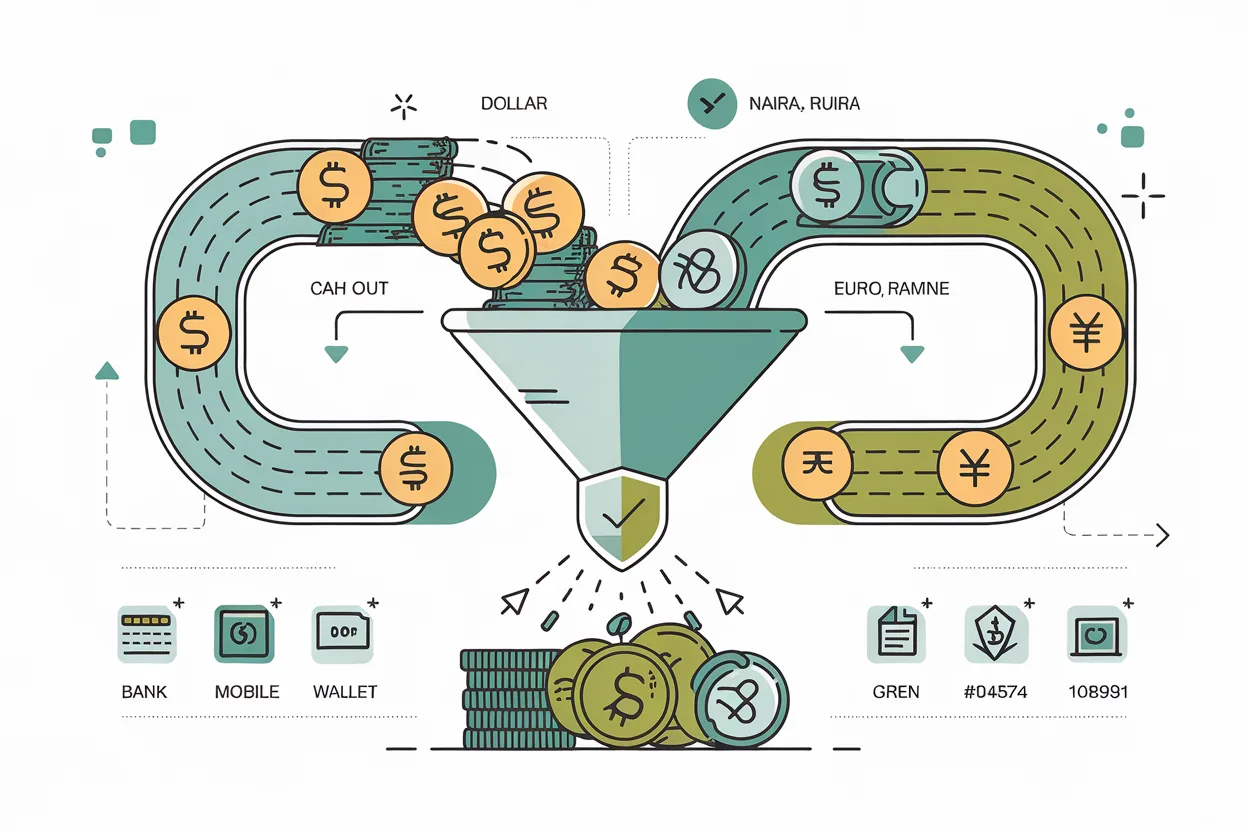
An off-ramp is any method that converts cryptocurrency into local fiat currency — the money you can actually spend, save, or withdraw from an ATM. It’s the opposite of an on-ramp, which is how you buy crypto with fiat in the first place.
Think of it this way: if buying Bitcoin with your bank card is the on-ramp to the crypto highway, then selling that Bitcoin for Nigerian naira, Kenyan shillings, or Indian rupees is the off-ramp.
| Direction | Action | Example |
|---|---|---|
| On-Ramp (Buy) | Fiat → Crypto | Pay $500 via bank transfer, receive 500 USDT |
| Off-Ramp (Sell) | Crypto → Fiat | Sell 500 USDT, receive ₦820,000 to your bank |
The off-ramp step matters more than most people realize. The method you choose, the platform you use, and the country you’re in all determine how much of your crypto gains actually make it to your pocket.
Off-ramping also carries unique regulatory risk. Unlike buying crypto (which most governments tolerate), selling crypto for local currency triggers tax events, AML scrutiny, and in some jurisdictions, mandatory reporting. Understanding these implications before you cash out is the difference between a smooth transaction and a frozen account.
5 Off-Ramp Methods Compared
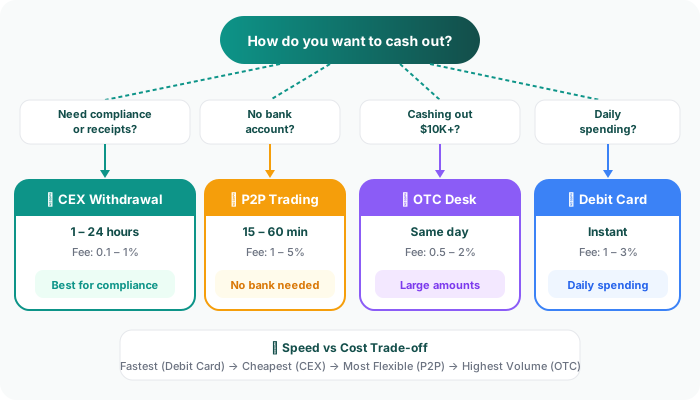
Before we dive into country-specific guides, here’s a high-level comparison of the five main ways to convert crypto to cash. Each has trade-offs between speed, cost, privacy, and convenience.
| Method | Speed | Cost | KYC Required | Best For |
|---|---|---|---|---|
| CEX Withdrawal | 1–24 hours | 0.1–1% + withdrawal fee | Yes | Large amounts, full compliance |
| P2P Trading | 15–60 min | 1–5% spread | Varies | Emerging markets, no local bank integration |
| OTC Desk | Same day | 0.5–2% | Yes | $10K+ amounts |
| Crypto Debit Card | Instant | 1–3% | Yes | Daily spending, convenience |
| DeFi Off-Ramp | Variable | Gas + swap fees | No | Privacy, no KYC preference |
CEX withdrawal is the most straightforward option if your exchange supports direct fiat withdrawal in your currency. You sell your crypto on the exchange’s spot market (lowest spread), then withdraw fiat to your bank. The downside is that most centralized exchanges require full KYC — passport, selfie, proof of address — and withdrawals can take up to 24 hours depending on the bank.
P2P trading is the dominant method across Africa and South Asia, where local bank integrations are limited. Platforms like Binance P2P, Bybit P2P, and local apps like Breet connect buyers and sellers directly. The trade-off is wider spreads — typically 1–5% above the market rate — but you can receive funds via mobile money (M-Pesa, OPay, GCash) in minutes.
OTC desks are designed for large transactions, typically $10,000+. They offer personalized service, better rates than P2P for high volumes, and often handle compliance on your behalf. Most require full KYC and source-of-funds documentation.
Crypto debit cards (like Bybit Card or Binance Card) let you spend crypto directly at merchants. The conversion happens at the point of sale. It’s convenient for daily spending but the 1–3% conversion fee adds up, and availability varies by country.
DeFi off-ramps use decentralized protocols to convert crypto without a centralized intermediary. Services like Ramp Network or Mt Pelerin offer fiat off-ramps with minimal or no KYC for smaller amounts. However, gas fees on Ethereum can eat into your amount, and availability in emerging markets is limited.
How to Cash Out Crypto — Country by Country
Now let’s get specific. Each of these five countries has different platforms, payment methods, regulations, and pitfalls.
Nigeria 🇳🇬
Nigeria is Africa’s largest crypto market by volume — and one of the most complicated for cashing out. The Central Bank of Nigeria (CBN) lifted its banking ban on crypto in late 2023, but regulatory uncertainty remains. Here’s what actually works in 2026.
Recommended method: Bybit P2P → OPay / Bank Transfer
Bybit’s P2P marketplace supports NGN pairs with OPay as a payment method, making it one of the fastest ways to convert USDT to naira. The typical spread is 1.5–3% above the market rate, and trades settle in 15–30 minutes.
Alternative: Breet app — a Nigerian-focused off-ramp with approximately 250,000 users. Breet converts USDT to NGN at roughly 1.7% total cost for a $500 transaction, with direct bank payouts. It’s popular because of its simplicity, but rates are slightly worse than manual P2P trading.
- Yellow Card shifted to B2B-only since January 2026 — it is no longer available for retail users.
- Binance P2P NGN pairs have been suspended since February 2024. Do not expect them to return soon.
- EFCC account freeze risk: In September 2024, the Economic and Financial Crimes Commission froze 22 bank accounts belonging to USDT sellers on P2P platforms. If you trade frequently, use a dedicated account and keep records.
- The SEC Investment and Securities Act (ISA) 2025 now requires crypto platforms operating in Nigeria to be licensed.
Step-by-step: Cash out crypto in Nigeria
- Buy or hold USDT (TRC-20 for lower fees) on any exchange or wallet.
- Send USDT to your Bybit account (verify your identity first).
- Go to Bybit P2P → Sell USDT → Select NGN.
- Choose a buyer with a high completion rate (>95%) and select OPay or bank transfer as your payment method.
- Confirm the trade, wait for the buyer’s payment, and verify it in your OPay/bank app before releasing the USDT.
- Never release crypto before confirming payment in your own app.
Nigeria’s SEC ISA 2025 framework means the regulatory picture is improving, but enforcement remains inconsistent. Keep transaction records — the EFCC has been increasingly active in monitoring P2P crypto flows. For a deeper look at Nigeria’s remittance landscape, see our Cheapest Way to Send Money to Nigeria guide.
Kenya 🇰🇪
Kenya has one of the most mature mobile money ecosystems in the world, and that makes crypto off-ramping remarkably smooth compared to other African markets.
Recommended method: Binance P2P → M-Pesa
Binance P2P in Kenya supports direct M-Pesa integration, making it the fastest and cheapest off-ramp. Binance charges zero P2P trading fees — you only pay the spread between buyer and seller, which is typically 1–2% for KES/USDT pairs.
Kenya’s crypto regulation operates under dual oversight: the Capital Markets Authority (CMA) handles securities aspects, while the Central Bank of Kenya (CBK) monitors banking and money transmission. As of 2026, KYC is mandatory on all regulated platforms operating in Kenya.
Step-by-step: Cash out crypto in Kenya
- Ensure you have USDT in your Binance account (complete KYC first).
- Navigate to Binance P2P → Sell → USDT → KES.
- Filter for M-Pesa as the payment method.
- Select a buyer with a high completion rate and reasonable price.
- Confirm the trade — the buyer sends KES to your M-Pesa via TILL or PAYBILL number.
- Verify the M-Pesa payment on your phone, then release the USDT.
The entire process typically takes 10–20 minutes. M-Pesa’s ubiquity in Kenya (over 30 million active users) means you can immediately use the funds, transfer to your bank, or withdraw cash from any M-Pesa agent. For broader context on Africa’s remittance landscape, see our Complete Guide to Crypto Remittance Costs.
Philippines 🇵🇭
The Philippines has one of the best-regulated crypto off-ramp ecosystems in Asia, thanks to the Bangko Sentral ng Pilipinas (BSP) licensing framework that’s been in place since 2017.
Recommended method: Coins.ph → GCash / Maya / InstaPay
Coins.ph is a BSP-licensed cryptocurrency exchange and the most trusted local platform in the Philippines. It supports USDT to PHP conversion with free withdrawal to GCash, Maya (formerly PayMaya), and InstaPay. That’s right — zero withdrawal fees for the most popular payment methods in the country.
Binance P2P also supports PHP pairs and is a solid alternative, especially for larger amounts where you might get better rates from manual P2P negotiation.
Step-by-step: Cash out crypto in the Philippines
- Send USDT to your Coins.ph account (supports TRC-20 and ERC-20).
- Sell USDT for PHP on the Coins.ph exchange.
- Withdraw PHP to GCash (free, instant), Maya, or InstaPay.
- From GCash, you can transfer to any Philippine bank, pay bills, or withdraw at partner ATMs.
The total cost is typically under 1% (just the exchange spread on Coins.ph), making the Philippines one of the cheapest countries for crypto off-ramping. The BSP requires all virtual asset service providers (VASPs) to register and comply with AML regulations, so expect KYC verification. For more on Philippine remittance options, see our Cheapest Way to Send Money to the Philippines guide.
India 🇮🇳
India is the world’s largest remittance recipient at $135.4 billion in FY25, but it’s also one of the most expensive countries for crypto off-ramping — not because of platform fees, but because of taxes.
Recommended method: CoinDCX → UPI / Bank Transfer
CoinDCX is one of India’s largest registered crypto exchanges, offering P2P trading for USDT/INR pairs with withdrawal to UPI or direct bank transfer. The platform fees are reasonable, but India’s tax regime is the real cost.
- 30% flat tax on all crypto gains (plus 4% health and education cess = 31.2% effective rate).
- 1% TDS (Tax Deducted at Source) on every sale transaction, regardless of profit or loss.
- No loss offset: You cannot deduct crypto trading losses against gains from other crypto assets or any other income.
- “India’s 30% tax makes crypto cash-out significantly more expensive than other countries.”
Step-by-step: Cash out crypto in India
- Transfer USDT to your CoinDCX account (complete KYC with PAN card + Aadhaar).
- Sell USDT for INR on CoinDCX’s P2P marketplace or spot market.
- Note: 1% TDS is automatically deducted on the sale.
- Withdraw INR to your linked UPI ID or bank account.
- Keep records for tax filing — you must declare crypto gains under Section 115BBH of the Income Tax Act.
For a deeper look at India’s remittance landscape and cheaper fiat-to-fiat alternatives, see our Cheapest Way to Send Money to India guide.
Pakistan 🇵🇰
Pakistan is a P2P-only market for crypto off-ramping. There are no official bank-integrated crypto exchanges, and the State Bank of Pakistan (SBP) has not authorized any bank to process crypto-to-fiat conversions. That said, Pakistan has a thriving peer-to-peer crypto economy.
Recommended method: Binance P2P → JazzCash / EasyPaisa
Binance P2P is the dominant off-ramp in Pakistan, supporting PKR pairs with JazzCash and EasyPaisa as payment methods. Trades are fast — typically settling in under 10 minutes — and USDT is the primary trading asset.
A significant regulatory development: Pakistan’s Virtual Asset Regulatory Authority (PVARA), established in 2026, now requires crypto platforms to obtain licensing. While enforcement is still in early stages, this marks Pakistan’s first formal recognition of crypto as a regulated asset class.
Step-by-step: Cash out crypto in Pakistan
- Hold USDT in your Binance account (KYC required with CNIC).
- Go to Binance P2P → Sell USDT → PKR.
- Select JazzCash or EasyPaisa as your preferred payment method.
- Choose a buyer with high completion rate (>95%) and good reviews.
- Confirm the trade and wait for PKR to arrive in your JazzCash/EasyPaisa account.
- Verify the payment before releasing USDT.
Since P2P is the only method, always trade with verified buyers and never release crypto before confirming payment. For context on Pakistan’s position in global remittance flows, see our Complete Guide to Crypto Remittance Costs.
Source of Funds (SoF) & AML Compliance
This is the section most crypto cash-out guides skip entirely — and it’s the one that causes the most financial pain. Don’t make the same mistake.
What is Source of Funds (SoF)?
Source of Funds documentation is proof of where your crypto came from. Exchanges are required by Anti-Money Laundering (AML) regulations to verify SoF for large withdrawals or when their automated risk systems flag a transaction. This isn’t optional — if you can’t prove it, your funds get frozen until you can.
When do exchanges require SoF?
- Withdrawals above a certain threshold (varies by exchange, typically $5,000–$10,000+).
- When your deposit wallet has interacted with flagged addresses.
- When your trading pattern looks unusual to automated risk systems.
- Random compliance audits (increasingly common in 2026).
AML pre-check tools
Before sending crypto to an exchange for cashing out, you can check your wallet’s risk score using tools like Chainalysis Reactor, Crystal Blockchain, or AMLBot. These services analyze your wallet’s transaction history and flag any connections to sanctioned entities, darknet markets, or high-risk addresses. A clean report costs $2–5 per check and can save you weeks of frozen funds.
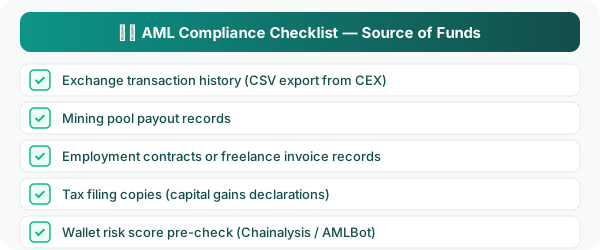
How to prepare SoF documentation:
- Exchange transaction history (CSV export): Download your complete trading history from every exchange you’ve used. This shows the paper trail of how you acquired the crypto.
- Mining records: If you mined the crypto, keep pool payout receipts, mining software logs, and electricity bills for the mining period.
- Employment or invoice records: If you were paid in crypto, keep employment contracts, invoices, and payment confirmations.
- Tax filings: Previous tax returns showing crypto declarations are strong SoF evidence.
Pro tip: prepare these documents before you need them. Create a folder with all your exchange CSVs, mining records, and receipts. When (not if) an exchange asks, you’ll be able to respond within hours instead of scrambling for days.
Tax When Cashing Out
Taxes are the invisible cost that turns a profitable trade into a mediocre one. Here’s the current tax situation for crypto cash-outs in each of our five focus countries as of 2026.
| Country | Tax on Crypto Cash-Out | Key Rule |
|---|---|---|
| Nigeria | Progressive (NTAA 2025) | First ₦800K exempt from capital gains |
| Kenya | Capital gains tax | CMA oversight, rates under review |
| Philippines | Up to 15% CGT | BIR reporting required |
| India | 30% + 1% TDS | No loss offset allowed |
| Pakistan | 15% CGT | PKR 500K annual exemption |
India stands out as the most expensive country for crypto taxation, with an effective rate of 31.2% on gains and no ability to offset losses. Nigeria’s new NTAA 2025 framework provides a generous ₦800,000 exemption, making it relatively favorable for smaller cashouts. Pakistan’s 15% rate with a PKR 500,000 exemption sits in the middle.
Tax rules change frequently and vary based on your specific situation. For a comprehensive breakdown covering 20+ countries, see our Crypto Tax Basics: What Every Holder Should Know (2026).
Common Mistakes When Cashing Out
Here are the seven that cost people the most money:
- Not preparing Source of Funds documentation. This is the number one cause of frozen accounts. Exchanges don’t warn you — they freeze first, ask questions later. Have your CSV exports, mining records, and transaction history ready before you initiate any large withdrawal.
- Using sanctioned or unlicensed platforms. Platforms like Garantex (sanctioned by OFAC) and unregulated P2P dealers operate in a legal gray zone. Using them can permanently taint your wallet address, making future withdrawals on legitimate exchanges impossible.
- Cashing out large amounts in one transaction. A single $50,000 withdrawal will almost certainly trigger AML alerts. Break large cashouts into reasonable amounts over time — not tiny amounts that look like structuring, but sensible tranches of $3,000–$5,000 that don’t raise red flags.
- Ignoring tax obligations. Tax enforcement on crypto is increasing globally in 2026. India’s 1% TDS is deducted automatically, but in countries like Nigeria and Kenya, it’s your responsibility to report. The penalties for non-reporting are growing steeper every year.
- Sending to the wrong network. Sending USDT on TRC-20 to an ERC-20 address means your funds are gone. Always double-check the network before confirming any transfer. This is an irreversible mistake that no customer support can fix.
- Trusting “OTC dealers” on Telegram without escrow. Telegram is full of “dealers” offering above-market rates for your crypto. Without escrow protection, you have zero recourse when they disappear with your funds. Use established P2P platforms with built-in escrow.
- Not checking wallet risk score before sending to an exchange. If your wallet has received funds from a flagged address (even indirectly), the exchange may freeze your entire balance. Use AMLBot or similar tools to check before depositing.
Frequently Asked Questions
What’s the cheapest way to cash out crypto?
For most emerging markets, P2P trading on Binance or Bybit offers the best balance of low cost and wide availability. In the Philippines specifically, Coins.ph offers near-zero fees with free GCash withdrawal. For amounts over $10,000, OTC desks typically offer better rates than P2P. The cheapest overall approach is selling on a CEX spot market (0.1% fee) and withdrawing fiat directly — but this requires the exchange to support your local currency.
Can I cash out crypto without KYC?
Technically, yes — through DeFi off-ramps, Bitcoin ATMs (with limits), or face-to-face P2P trades. However, no-KYC options typically come with higher fees (3–8% premium) and lower limits. Major P2P platforms like Binance and Bybit now require KYC for most countries. DeFi off-ramps like Ramp Network offer limited no-KYC options for smaller amounts.
How long does it take to convert crypto to cash?
P2P trades typically settle in 15–60 minutes. CEX withdrawals to bank accounts take 1–24 hours depending on the bank and country. Crypto debit cards convert instantly at the point of sale. The slowest method is OTC for large amounts, which can take a full business day due to compliance checks.
It depends on your country and how you cash out. In Nigeria, the EFCC has frozen accounts of frequent P2P USDT sellers. In India, large unexplained deposits can trigger bank inquiries. To minimize risk: use the same bank account consistently, keep transaction amounts reasonable, maintain clear records, and be prepared to explain the source of funds if asked.
Do I need to pay tax when cashing out?
In most countries, yes. Converting crypto to fiat is a taxable event in Nigeria (NTAA 2025), Kenya (capital gains), the Philippines (up to 15% CGT), India (30% + 1% TDS), and Pakistan (15% CGT). Tax is typically calculated on your gain — the difference between what you paid for the crypto and what you sold it for. India is unique in that the 1% TDS is deducted automatically on every sale, regardless of profit.
Continue Learning
This guide is part of ChainGain’s remittance and off-ramp knowledge base. Here are the most relevant next reads:
- Complete Guide to Crypto Remittance Costs (2026) — comprehensive cost comparison across 10 corridors
- Best Blockchain for Sending Money — which network is fastest and cheapest for transfers
- How to Send USDT Abroad — step-by-step guide for international USDT transfers
- P2P Crypto Trading Safety Guide — protect yourself from scams on P2P platforms
- Crypto Tax Basics: What Every Holder Should Know (2026) — tax rules for 20+ countries
- Cheapest Way to Send Money to Nigeria (2026)
- Cheapest Way to Send Money to India (2026)
- Cheapest Way to Send Money to the Philippines (2026)