
Beginner
Understanding crypto remittance costs starts with a stark reality: every year, people working abroad send over $905 billion back home to their families. The average cost? 6.49% of the amount sent — meaning roughly $59 billion disappears in fees annually. That’s more than many countries’ entire foreign aid budgets.
I started tracking remittance costs in 2021 when a friend in Lagos told me he was paying nearly 10% to receive money from his brother in London. Since then, I’ve tested dozens of methods — bank wires, money transfer apps, and cryptocurrency — across multiple corridors. What I found surprised me: the cheapest option isn’t always what you’d expect, and it changes depending on where you’re sending money.
This guide breaks down the real, verified costs of sending money internationally in 2026, comparing traditional services like Western Union and Wise with cryptocurrency options including USDT, Bitcoin Lightning, XRP, and more. Every number comes from official sources: World Bank Remittance Prices Worldwide (Q3 2025), exchange fee schedules verified in March 2026, and my own transfer tests.
What Remittances Are and Why Costs Matter
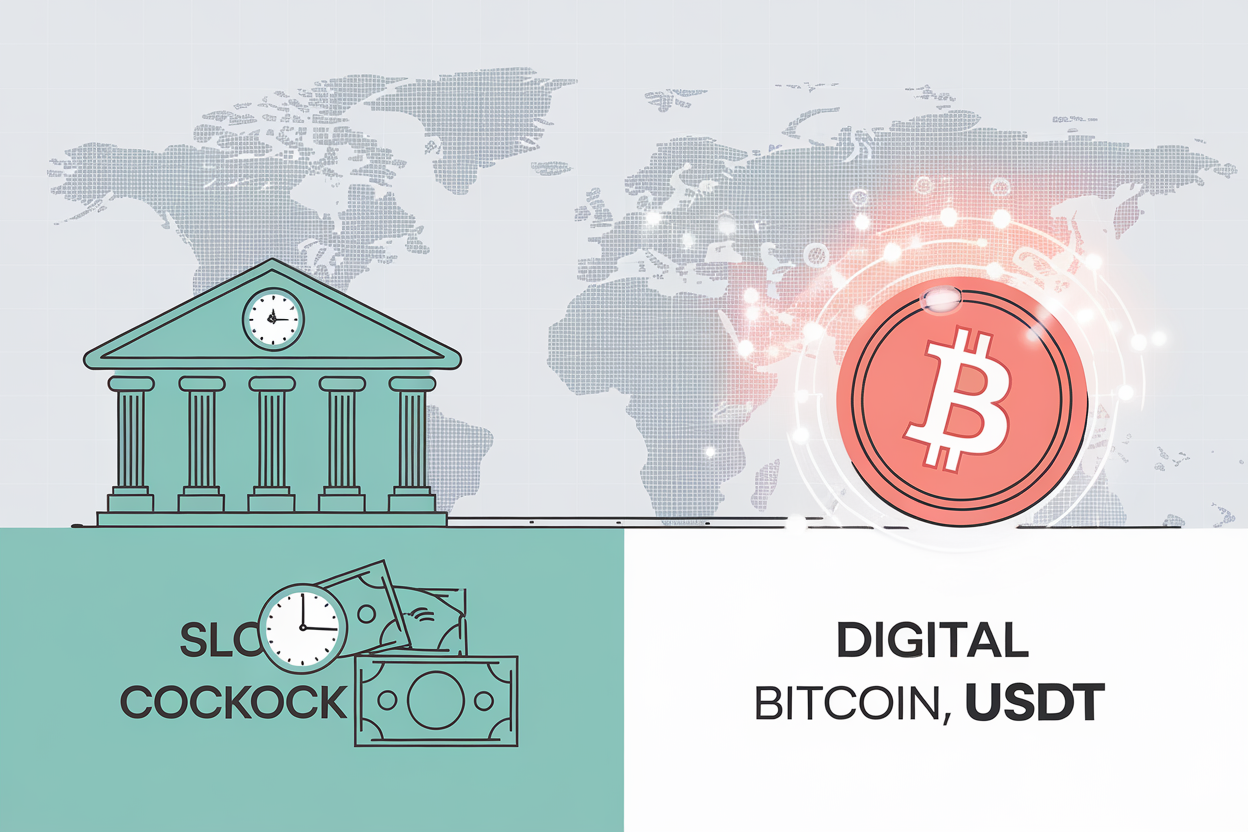
A remittance is money sent by someone working in one country to people in another country — typically family members. Remittances are a financial lifeline for developing nations, often exceeding foreign direct investment and aid combined.
Key statistics (2025-2026):
- Global remittance flows: $905 billion annually (up 4.6% year-over-year)
- Average global cost to send $200: 6.49% ($12.98)
- UN Sustainable Development Goal target: reduce to below 3% by 2030
- G20 target: 5% (still not met globally)
- Countries where remittances exceed 3% of GDP: 60+
- Top receiving country: India ($135 billion annually)
For a family receiving $200 per month, the difference between a 6.5% fee and a 1% fee is $132 per year — a meaningful amount in countries where the average monthly wage is $200-400.
How We Calculate Total Transfer Cost
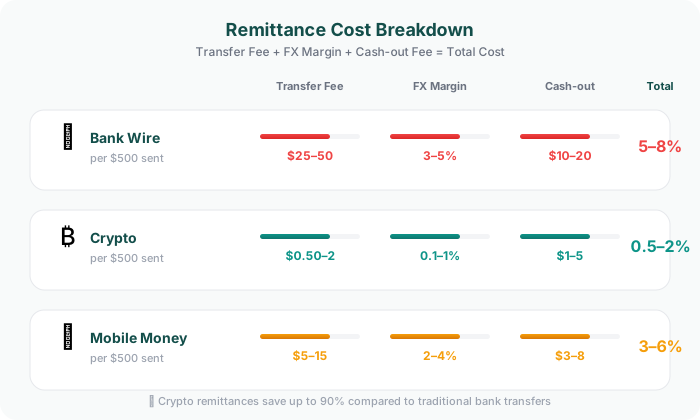
Most remittance comparisons only show the advertised fee. That’s misleading. The true cost of any international transfer has three components:
| Cost Component | What It Is | How It Hides |
|---|---|---|
| Transfer Fee | The flat or percentage fee the service charges | Often shown as “$0” while markup is hidden in exchange rate |
| FX Margin (Exchange Rate Markup) | The difference between the mid-market rate and the rate you receive | Can add 1-5% to cost without appearing as a “fee” |
| Receiving Fee / Cash-out Cost | Charges on the receiving end (P2P spread for crypto, agent fees for traditional) | Often ignored in crypto comparisons |
Our formula: Total Cost = Transfer Fee + FX Margin + Cash-out/Receiving Cost
For cryptocurrency transfers, the cash-out cost is the P2P exchange spread — the premium or discount when converting crypto to local currency. This is the cost most crypto-remittance articles conveniently leave out.
Traditional Remittance Costs by Corridor (2026 Data)
The following data comes from the World Bank Remittance Prices Worldwide database (Q3 2025, the latest available) and direct provider verification in March 2026. All costs are calculated for a $200 transfer unless noted otherwise.
Major Corridors: Cost Comparison Table
| Corridor | Average Cost | Cheapest Provider | Cheapest Cost | Most Expensive |
|---|---|---|---|---|
| US → Nigeria | 2.72% ($5.43) | MoneyGram (debit) | 0.01% ($0.02) | WU Agent: 9.87% |
| US → Pakistan | 3.81% ($7.61) | Ria | 0.45% ($0.90) | WU Agent: 13.67% |
| US → Philippines | 4.46% ($8.91) | MoneyGram (debit) | 0.58% ($1.16) | Xoom: up to 6.99% |
| US → India | 4.77% ($9.54) | Wise | 1.02% ($2.04) | Bank wire: 6-8% |
| US → Mexico | 4.80% ($9.60) | Wise | 0.98% ($1.96) | Bank wire: 7-10% |
| US → Brazil | 5.21% ($10.42) | Wise | 1.15% ($2.30) | Bank wire: 8-12% |
| UK → Nigeria | 4.18% | WorldRemit | 0.80% | Bank wire: 8-10% |
| UAE → India | 2.98% | Exchange houses | 0.5% | Bank wire: 5-7% |
| Saudi → Pakistan | 3.20% | STCPay | 0.8% | Bank wire: 5-6% |
| Germany → Turkey | 3.85% | Wise | 0.72% | Bank wire: 7-9% |
| US → Colombia | 5.50% ($11.00) | Remitly | 1.20% ($2.40) | WU Agent: 8-10% |
| US → Bangladesh | 4.10% ($8.20) | bKash/Nagad direct | 1.50% ($3.00) | Bank wire: 6-8% |
| Japan → Philippines | 5.90% | Wise | 1.40% | Bank wire: 8-12% |
| S. Korea → Vietnam | 4.50% | SentBe/Toss | 0.90% | Bank wire: 7-10% |
| Russia → CIS | 1.50-3.00% | Bank transfer (RUB) | 0.5-1.0% | WU/MG: 5-8% |
Key finding: Online digital transfers have become dramatically cheaper than agent/cash options. The narrative that traditional remittances cost “10-15%” is outdated for online transfers — but still true for in-person cash services.
Provider Breakdown: The Big Three
Western Union
Western Union remains the largest remittance network with 500,000+ agent locations worldwide. Their pricing varies wildly depending on how you send and receive:
| Corridor ($200) | Online (Bank) | Online (Card) | Agent (Cash) |
|---|---|---|---|
| US → Nigeria | $2.65 (1.33%) | $4.45 (2.23%) | $19.74 (9.87%) |
| US → Pakistan | $2.97 (1.49%) | $4.45 (2.23%) | $27.34 (13.67%) |
| US → Philippines | $8.91 (4.46%) | $10.12 (5.06%) | $10.12 (5.06%) |
The agent-to-cash option can cost 7-10x more than the online option to the same country.
MoneyGram
MoneyGram consistently offers the lowest fees for debit card transfers to certain corridors:
| Corridor ($200) | Best Price | Method |
|---|---|---|
| US → Nigeria | $0.02 (0.01%) | Debit card, online |
| US → Philippines | $1.16 (0.58%) | Debit card, online |
| US → Pakistan | $3.23 (1.62%) | Cash pickup |
MoneyGram also partners with Stellar blockchain for crypto-to-cash services in 170+ countries — more on this below.
Wise (formerly TransferWise)
Wise charges higher flat fees but uses the mid-market exchange rate with 0% markup. This makes Wise better for larger transfers:
| Corridor | $200 Transfer | $500 Transfer | $1,000 Transfer |
|---|---|---|---|
| US → Pakistan | $3.12 (1.56%) | $5.69 (1.14%) | $9.25 (0.93%) |
| US → Philippines | $8.12 (4.06%) | $12.50 (2.50%) | $18.20 (1.82%) |
| US → India | $2.04 (1.02%) | $4.80 (0.96%) | $8.50 (0.85%) |
| US → Mexico | $1.96 (0.98%) | $4.50 (0.90%) | $8.10 (0.81%) |
In my experience, Wise becomes the cheapest traditional option once you’re sending $500 or more to most destinations.
Cryptocurrency Remittance Costs: The Complete Picture
Now for the crypto side. I’ve been sending crypto across borders since 2021, and the biggest mistake people make is comparing just the network fee to the entire traditional transfer cost. That’s not an honest comparison. Here’s the full breakdown.
Step 1: Buying Crypto (Exchange Trading Fees)
| Exchange | Maker Fee | Taker Fee | Cost on $200 |
|---|---|---|---|
| Binance | 0.10% | 0.10% | $0.20 |
| Bybit | 0.10% | 0.10% | $0.20 |
| OKX | 0.08% | 0.10% | $0.16-0.20 |
| KuCoin | 0.10% | 0.10% | $0.20 |
| MEXC | 0.00% | 0.05% | $0.00-0.10 |
| Kraken | 0.25% | 0.40% | $0.50-0.80 |
Typical cost: $0.10-0.50 for a $200 purchase (0.05-0.25%).
Step 2: Sending Crypto (Network/Withdrawal Fees)
This is where the choice of cryptocurrency and network makes a massive difference. Here’s what it actually costs to withdraw from major exchanges in March 2026:
Stablecoins (USDT & USDC)
| Network | USDT Fee (Binance) | USDC Fee (Binance) | Speed |
|---|---|---|---|
| BNB Smart Chain (BEP-20) | $0.01 | Free | ~15 seconds |
| Polygon | $0.07 | $0.10 | ~5 seconds |
| Arbitrum One | $0.10 | $0.10 | ~1 second |
| Solana | $0.30 | $0.30 | ~0.4 seconds |
| TRON (TRC-20) | $1.00 | $1.00 | ~3 seconds |
| Ethereum (ERC-20) | $0.50-3.00 | $0.80+ | ~15 seconds |
Cheapest stablecoin options across exchanges:
| Exchange | Cheapest USDT | Network | Cheapest USDC | Network |
|---|---|---|---|---|
| Binance | $0.01 | BEP-20 | Free | BEP-20 |
| MEXC | $0.004 | Polygon | $0.10 | Polygon |
| Bitget | $0.10 | Arbitrum | Free | Arbitrum |
| Bybit | $0.10 | Arbitrum | Free | Mantle |
| KuCoin | Free | TON | $0.30 | Polygon |
| Gate.io | $0.05 | Arbitrum | $0.10 | Arbitrum |
Other Cryptocurrencies for Remittances
| Cryptocurrency | Typical Fee | Speed | Best For | Key Risk |
|---|---|---|---|---|
| BTC (Lightning Network) | $0.01-0.10 | Instant (seconds) | Small-medium amounts, tech-savvy users | Channel liquidity limits; requires Lightning wallet |
| XRP (Ripple) | $0.0002-0.01 | 3-5 seconds | Fast cross-border; good liquidity | Regulatory uncertainty in some regions |
| XLM (Stellar) | $0.00001 | 3-5 seconds | MoneyGram integration; lowest fees | Lower liquidity than XRP in some corridors |
| SOL (Solana) | $0.001-0.01 | 0.4 seconds | Speed; growing DeFi ecosystem | Network outage history; less P2P availability |
| LTC (Litecoin) | $0.01-0.05 | 2.5 minutes | Wide exchange support; proven reliability | Slower than newer chains |
| TON (Toncoin) | $0.01-0.05 | 5 seconds | Telegram integration; CIS region popularity | Smaller ecosystem outside CIS |
| CELO | $0.001 | 5 seconds | Mobile-first design; built for remittances | Low awareness; limited P2P markets |
| ETH (Ethereum L1) | $0.50-5.00 | 15 seconds | Maximum liquidity; widely accepted | High and unpredictable gas fees |
My recommendation for remittances: USDT or USDC on BEP-20, Polygon, or Arbitrum networks. They combine near-zero fees with price stability (no volatility risk during transfer).
Step 3: Converting to Local Currency (The Hidden Cost)
This is where most crypto remittance guides fall short. Your recipient needs local currency — not USDT. Converting crypto to local fiat through P2P platforms always involves a spread (premium or discount vs. the market rate).
| Country | Typical P2P Spread (USDT) | Primary P2P Platforms | Common Off-Ramps |
|---|---|---|---|
| Nigeria (NGN) | 2-5% | Remitano, Noones, Breet | GTBank, Access Bank, Opay |
| Pakistan (PKR) | 1-3% | Binance P2P, Noones | JazzCash, Easypaisa, HBL |
| Philippines (PHP) | 0.5-2% | Coins.ph, Binance P2P | GCash, Maya, UnionBank |
| India (INR) | 0.5-1.5% | WazirX P2P, Binance P2P | UPI, IMPS, bank transfer |
| Brazil (BRL) | 1-2% | Binance P2P, Mercado Bitcoin | PIX, bank transfer |
| Mexico (MXN) | 1-2.5% | Bitso, Binance P2P | SPEI, bank transfer |
| Russia (RUB) | 1-3% | Telegram OTC, Bestchange | Sberbank, Tinkoff, SBP |
| Turkey (TRY) | 1-2% | Binance P2P, Paribu | Bank transfer, Papara |
| Colombia (COP) | 1.5-3% | Binance P2P, Bitso | Nequi, Bancolombia |
| Bangladesh (BDT) | 2-4% | P2P informal, Binance P2P | bKash, Nagad, bank transfer |
| Vietnam (VND) | 1-2% | Binance P2P, Remitano | Vietcombank, MoMo |
| Indonesia (IDR) | 1-2.5% | Tokocrypto, Indodax P2P, Binance P2P | BCA, Mandiri, GoPay, OVO, Dana |
| Thailand (THB) | 0.5-1.5% | Bitkub, Binance TH | PromptPay, K PLUS, SCB EASY |
| South Korea (KRW) | 0.5-2% (kimchi premium) | Upbit, Bithumb | KakaoPay, Toss, bank transfer |
| Japan (JPY) | 0.5-1.5% | bitFlyer, Coincheck, GMO Coin | PayPay, LINE Pay, bank transfer |
| France/Germany (EUR) | 0.1-0.5% | Binance, Kraken, Bitstamp | SEPA Instant, N26, Revolut |
| UAE (AED) | 0.5-1.5% | Binance (VARA), OKX, Rain | Emirates NBD, FAB, PayIt |
| Saudi Arabia (SAR) | 1-2% | Rain, Binance P2P, Bitget | STC Pay, Al Rajhi, SNB |
| Ukraine (UAH) | 1-3% | WhiteBIT, Kuna, OKX P2P | PrivatBank, Monobank |
Important: P2P spreads are highly variable. During currency crises or regulatory crackdowns, Nigeria’s P2P premium has exceeded 10%. These estimates reflect normal market conditions.

Head-to-Head: Crypto vs Traditional by Country
Now let’s put it all together. For each major corridor, I’ve calculated the total real cost of sending $200 and $500 via both traditional and crypto methods.
US → Nigeria
| Method | $200 Cost | $200 % | $500 Cost | Speed |
|---|---|---|---|---|
| MoneyGram (debit, online) | $0.02 | 0.01% | $0.05 | <1 hour |
| WorldRemit | $2.18 | 1.09% | $4.50 | Minutes |
| Western Union (online) | $2.65 | 1.33% | $5.50 | Same day |
| Crypto (best case) | $4.21 | 2.1% | $5.70 | Minutes |
| Crypto (typical) | $8.20 | 4.1% | $15.70 | Minutes-hours |
| Western Union (agent cash) | $19.74 | 9.87% | $45.00 | <1 hour |
Verdict: Traditional digital services win for Nigeria. MoneyGram’s near-zero cost is hard to beat, and Nigeria’s high P2P spreads (2-5%) eat into crypto’s fee advantage. Crypto only makes sense if you’re avoiding the banking system entirely or sending larger amounts ($1,000+).
US → Philippines
| Method | $200 Cost | $200 % | $500 Cost | Speed |
|---|---|---|---|---|
| MoneyGram (debit, online) | $1.16 | 0.58% | $2.90 | <1 hour |
| Crypto (best case) | $1.21 | 0.6% | $3.01 | Minutes |
| Crypto (typical) | $3.20 | 1.6% | $6.50 | Minutes-hours |
| Remitly | $6.49 | 3.25% | $12.00 | Varies |
| Wise | $8.12 | 4.06% | $12.50 | 3-5 days |
| Western Union | $8.91 | 4.46% | $18.00 | Same day |
Verdict: The Philippines is crypto’s strongest corridor. Low P2P spreads (0.5-2%) plus excellent fiat off-ramps like GCash and Coins.ph make crypto competitive even for small amounts. However, MoneyGram’s online debit option remains slightly cheaper.
US → India
| Method | $200 Cost | $200 % | $500 Cost | Speed |
|---|---|---|---|---|
| Wise | $2.04 | 1.02% | $4.80 | 1-2 days |
| Crypto (best case) | $1.21 | 0.6% | $3.01 | Minutes |
| Crypto (typical) | $2.70 | 1.4% | $5.70 | Minutes |
| Remitly | $3.99 | 2.00% | $7.50 | Minutes |
| Western Union (online) | $5.00 | 2.50% | $10.00 | Same day |
Verdict: Competitive for both options. India’s strong UPI infrastructure makes P2P off-ramping easy, but Wise’s 0% FX markup is also very competitive for larger amounts.
US → Mexico
| Method | $200 Cost | $200 % | $500 Cost | Speed |
|---|---|---|---|---|
| Wise | $1.96 | 0.98% | $4.50 | 1-2 days |
| Crypto (Bitso) | $1.50 | 0.75% | $3.50 | Minutes |
| Remitly | $3.99 | 2.00% | $7.00 | Minutes |
| Western Union (online) | $5.00 | 2.50% | $10.00 | Same day |
Verdict: The US-Mexico corridor is a crypto remittance success story. Bitso processed $6.5 billion in crypto-powered remittances in 2024, handling over 10% of total US-Mexico flows. Established crypto infrastructure makes this one of the cheapest corridors.
US → Pakistan
| Method | $200 Cost | $200 % | $500 Cost | Speed |
|---|---|---|---|---|
| Ria | $0.90 | 0.45% | $2.25 | 3-5 days |
| Western Union (online) | $2.97 | 1.49% | $6.00 | Same day |
| Wise | $3.12 | 1.56% | $5.69 | 3-5 days |
| Crypto (best case) | $2.21 | 1.1% | $5.50 | Minutes |
| Crypto (typical) | $5.20 | 2.6% | $10.70 | Minutes |
Verdict: Traditional services are cheaper for most users. Ria’s 0.45% is remarkable. However, Pakistan’s banking restrictions on crypto are easing — the Virtual Assets Act 2026 (passed March 5, 2026) may improve crypto off-ramps significantly.
Russia → CIS Countries
| Method | $200 Cost | $200 % | Speed | Notes |
|---|---|---|---|---|
| Bank transfer (RUB) | $1-2 | 0.5-1% | 1-2 days | Limited by sanctions on some banks |
| Crypto (USDT via TON) | $2-4 | 1-2% | Minutes | Telegram integration popular in CIS |
| Western Union | $10-16 | 5-8% | Same day | Service limited due to sanctions |
Verdict: Crypto is increasingly essential for Russia-CIS transfers due to sanctions limiting traditional services. TON (Toncoin) is particularly popular in this region thanks to Telegram’s 900M+ user base. Russia legally permits crypto for international payments since 2024.
US → Brazil
| Method | $200 Cost | $200 % | $500 Cost | Speed |
|---|---|---|---|---|
| Wise | $2.30 | 1.15% | $5.25 | 1-2 days |
| Crypto (best case) | $2.21 | 1.1% | $5.50 | Minutes |
| Crypto (typical) | $4.20 | 2.1% | $8.50 | Minutes |
| Remitly | $3.99 | 2.00% | $8.00 | Varies |
| Western Union (online) | $6.00 | 3.00% | $12.00 | Same day |
Verdict: Close competition. Brazil’s PIX instant payment system makes crypto off-ramping efficient. However, note that as of February 2026, Brazil classifies cross-border crypto as FX transactions, which may add tax implications.
Gulf (UAE/Saudi) → South Asia
The Gulf-to-South Asia corridor is one of the world’s largest remittance routes, driven by millions of expatriate workers. The UAE and Saudi Arabia are among the top 5 remittance-sending countries globally.
| Method | $200 Cost | $200 % | $500 Cost | Speed |
|---|---|---|---|---|
| Exchange houses (UAE→India) | $1.00 | 0.50% | $2.50 | Same day |
| STC Pay (Saudi→Pakistan) | $1.60 | 0.80% | $4.00 | Minutes |
| Crypto (best case) | $1.21 | 0.6% | $3.01 | Minutes |
| Crypto (typical) | $3.20 | 1.6% | $6.50 | Minutes |
| Western Union (online) | $5.00 | 2.50% | $10.00 | Same day |
| Bank wire | $10-14 | 5-7% | $15-25 | 2-5 days |
Verdict: Gulf exchange houses are highly efficient and well-established — crypto struggles to compete on cost for the UAE→India corridor. However, for Saudi→Pakistan and Gulf→Bangladesh, where exchange house access may be limited for some workers, crypto via P2P offers a viable alternative with comparable speed. The AED and SAR are dollar-pegged, eliminating FX volatility risk during the transfer.
Japan → Philippines/Vietnam
Japan hosts large Filipino and Vietnamese worker communities. The Japan→Philippines corridor averages 5.90% through traditional services — one of the most expensive in Asia-Pacific.
| Method | $200 Cost | $200 % | $500 Cost | Speed |
|---|---|---|---|---|
| Wise | $2.80 | 1.40% | $6.50 | 1-2 days |
| Crypto (best case) | $1.21 | 0.6% | $3.01 | Minutes |
| Crypto (typical) | $2.70 | 1.4% | $5.70 | Minutes |
| SBI Remit (XRP-based) | $1.96 | 0.98% | $4.80 | Minutes |
| Bank wire (JP Post/MUFG) | $11.80 | 5.90% | $22.00 | 2-5 days |
Verdict: This is a strong corridor for crypto. Japan’s traditional bank wire fees are among the highest in Asia-Pacific. Notably, SBI Remit already uses XRP/Ripple for the Japan→Philippines corridor, proving institutional crypto remittance demand. Coins.ph on the Philippine side makes off-ramping seamless. Japan is reclassifying crypto as financial products in 2026 with a reduced flat 20% tax rate (down from up to 55%), which should further boost adoption.
South Korea → Vietnam
South Korea is the least expensive G20 remittance sender at 3.07% average. The Korea→Vietnam corridor is significant due to a large Vietnamese worker population.
| Method | $200 Cost | $200 % | $500 Cost | Speed |
|---|---|---|---|---|
| SentBe/Toss | $1.80 | 0.90% | $4.50 | Minutes-hours |
| Crypto (best case) | $1.21 | 0.6% | $3.01 | Minutes |
| Crypto (typical) | $3.20 | 1.6% | $6.50 | Minutes |
| Bank wire | $9.00 | 4.50% | $18.00 | 2-5 days |
Verdict: Korea’s fintech ecosystem (SentBe, Toss) already offers competitive rates, making crypto less of a cost advantage for small amounts. However, Korea’s “kimchi premium” — where crypto prices on Korean exchanges trade 0.5-2% above global rates — can actually work in your favor when receiving. South Korea’s VAUPA (Virtual Asset User Protection Act) requires real-name bank accounts for exchange access, adding a verification step but improving security.
Germany → Turkey/Ukraine
Germany hosts Europe’s largest Turkish diaspora and, since 2022, its largest Ukrainian refugee population (1.23 million). These corridors are high-volume and emotionally significant.
| Method | $200 Cost | $200 % | $500 Cost | Speed |
|---|---|---|---|---|
| Wise (DE→TR) | $1.44 | 0.72% | $3.60 | 1-2 days |
| Wise (DE→UA) | $2.10 | 1.05% | $5.00 | 1-3 days |
| Crypto (best case) | $0.31 | 0.15% | $0.76 | Minutes |
| Crypto DE→TR (typical) | $3.20 | 1.6% | $6.50 | Minutes |
| Crypto DE→UA (typical) | $4.20 | 2.1% | $8.50 | Minutes-hours |
| Bank wire (SEPA to Turkey) | $7.70 | 3.85% | $15.00 | 2-3 days |
Verdict: Wise dominates the Germany→Turkey corridor with excellent rates, making crypto’s cost advantage marginal. For Germany→Ukraine, crypto becomes more attractive due to wartime banking disruptions — some Ukrainian banks have limited international transfer capacity. WhiteBIT (Ukrainian-founded, 8M+ users) and Monobank are popular off-ramps, though NBU martial law limits crypto purchases to 100,000 UAH/month (~$2,300). Both corridors benefit from the EU’s MiCA regulation, which provides clear legal frameworks for using crypto in Germany.
Indonesia (Inbound Corridors)
Indonesia receives approximately $18.2 billion in remittances annually, primarily from Saudi Arabia, Malaysia, and the UAE — driven by its massive overseas worker population. Indonesia ranks #7 globally in crypto adoption (Chainalysis 2025).
| Method | $200 Cost | $200 % | $500 Cost | Speed |
|---|---|---|---|---|
| Exchange house (Saudi→ID) | $2.00 | 1.00% | $5.00 | Same day |
| Crypto (best case) | $2.21 | 1.1% | $5.50 | Minutes |
| Crypto (typical) | $4.20 | 2.1% | $8.50 | Minutes |
| Bank wire | $10.00 | 5.00% | $20.00 | 2-5 days |
Verdict: Indonesia’s crypto ecosystem is maturing rapidly with 29 OJK-licensed exchanges and 14+ million crypto users. However, crypto is classified as a “digital financial asset” — not a payment method — meaning recipients must convert through licensed exchanges like Tokocrypto or Indodax. P2P payment infrastructure (GoPay, OVO, Dana via QRIS) is excellent for cash-out. For the Malaysia→Indonesia corridor, QRIS wallet-to-wallet transfers are becoming a strong non-crypto competitor.
EU Internal (SEPA Zone)
Within the EU, SEPA Instant transfers are essentially free and settle in seconds — making crypto remittances unnecessary for intra-EU transfers. The real crypto use case for EU residents is outbound transfers to non-SEPA countries (Turkey, North Africa, Sub-Saharan Africa, Southeast Asia).
Under MiCA (Markets in Crypto-Assets Regulation), the EU has the world’s most comprehensive crypto framework. Key points for remittance users:
- All CASPs (Crypto Asset Service Providers) must hold MiCA authorization by July 1, 2026
- Transfer of Funds Regulation requires originator/beneficiary information for all crypto transfers (the “travel rule”)
- Stablecoin regulation: USDT availability may be restricted in the EU; EURC (Circle’s MiCA-compliant euro stablecoin) is the recommended alternative
- Consumer protection: MiCA mandates reserve transparency and redemption rights for stablecoin holders
For French residents sending to North Africa or German residents sending to Turkey, crypto offers speed and cost advantages over traditional bank wires — but Wise and other fintechs are highly competitive in these corridors.
Lightning Network and XLM: The Remittance Specialists
Two crypto projects deserve special attention for remittances:
Bitcoin Lightning Network
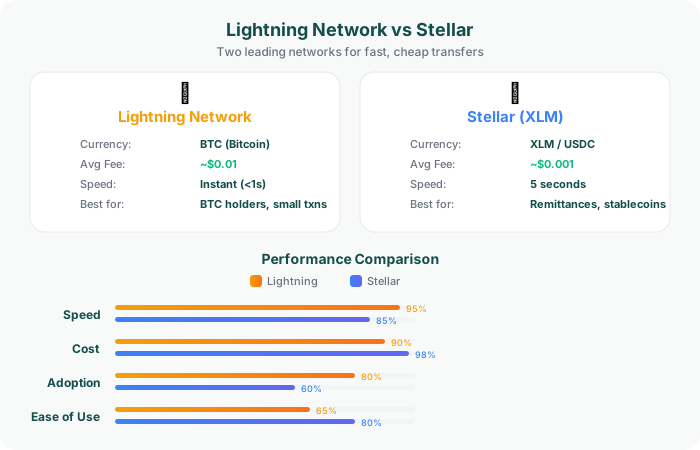
The Lightning Network is Bitcoin’s second layer for instant, low-cost payments. For remittances, it offers:
- Cost: Typically $0.01-0.10 per transaction regardless of amount
- Speed: Instant (seconds)
- Key services:
- Strike (Send Globally): Sends Lightning payments to Nigeria, Kenya, and Ghana with instant conversion to local currency via bank, mobile money, or Bitnob account
- Machankura: Bitcoin via USSD technology — works on basic feature phones without internet. In Kenya, converts to M-PESA at zero fees
Limitation: Lightning requires technical understanding and has channel liquidity constraints for large amounts ($5,000+). Best for tech-savvy users sending small to medium amounts.
Stellar (XLM) + MoneyGram
Stellar’s partnership with MoneyGram creates a unique bridge between crypto and cash:
- USDC on Stellar: Processing ~$500 million monthly in transaction volume
- MoneyGram Ramps: Convert stablecoins to cash at 81,000+ locations in 170+ countries
- How it works: Send USDC on Stellar → recipient visits MoneyGram location → converts to local cash
- XLM transaction fee: $0.00001 (essentially free)
This combination solves the “last mile” problem: even recipients without bank accounts or smartphones can receive crypto-powered remittances as physical cash.
Regulatory Landscape: What You Need to Know
Using crypto for remittances is legal in most countries, but regulations vary significantly:
| Country | Crypto Legal Status | Key Regulator | Tax on Crypto | Key Risk |
|---|---|---|---|---|
| Nigeria | Legal, regulated (ISA 2025) | SEC Nigeria | 15-25% income tax | VASP license delays; Binance P2P suspended |
| Pakistan | Gray → legalizing (VA Act 2026) | PVARA (new) | CGT (rate TBD) | Banks still block crypto transactions |
| Philippines | Legal, well-regulated | BSP + SEC | Income tax applies | PHP 100M capital req for CASPs |
| Brazil | Legal, comprehensive (Feb 2026) | BCB | FX tax under review | Stablecoins = FX classification |
| Russia | International payments: legal | Bank of Russia | 13-15% | Domestic payments illegal |
| India | Legal, taxed heavily | RBI + SEBI | 30% + 1% TDS | High tax discourages trading |
| Mexico | Legal, regulated | CNBV | Income tax | VASP regulation tightening |
| Indonesia | Legal (trade only, not payment) | OJK | Income tax | IDR 1T capital req; 29 licensed exchanges |
| Thailand | Legal (0% capital gains tax to 2029) | SEC Thailand | 0% on licensed exchanges (until 2029) | Payment use restricted by BOT |
| South Korea | Legal (VAUPA) | FSC | 20% on gains above ₩2.5M (from 2025) | Real-name bank accounts required |
| Japan | Legal (→ financial product 2026) | JFSA + JVCEA | Flat 20% (reduced from up to 55%) | FSA registration mandatory; ~30 licensed exchanges |
| EU (France/Germany) | Legal (MiCA) | AMF (FR) / BaFin (DE) | Varies by country (30% FR, ~26% DE) | MiCA CASP deadline: Jul 1, 2026; travel rule enforced |
| UAE | Legal, comprehensive | VARA + ADGM | 0% (no personal income tax) | Travel rule fully implemented (Feb 2026) |
| Saudi Arabia | Gray zone (not prohibited) | SAMA + CMA | No dedicated framework | No local exchange licensing; P2P only |
| Ukraine | Pending legislation (Bill 10225-d) | NBU (pending) | 5% preferential → 18% + 5% military levy | 100K UAH/month limit under martial law |
| Vietnam | Legal (Jan 2026 Digital Tech Law) | Min. of Finance + SBV | Income tax (specifics TBD) | ~$400M capital req for exchanges |
| Turkey | Legal (restricted) | SPK/CMB | 10% withholding | $3K daily/$5K monthly limits (MASAK) |
Always check your local regulations before using crypto for cross-border transfers. Tax obligations apply in most jurisdictions even if crypto itself is legal.

When Crypto Wins vs When Traditional Wins
Based on testing dozens of corridors, here’s my honest assessment:
Crypto Is Cheaper When:
- You’re sending $500+ — Network fees become negligible as a percentage
- The corridor has good P2P infrastructure — Philippines, Mexico, Brazil, India
- Traditional options are limited — Russia/CIS (sanctions), certain African corridors
- Speed matters — Crypto settles in minutes vs 3-5 days for bank wires
- The recipient is unbanked — They need only a phone, not a bank account
- You’re already in the crypto ecosystem — No on-ramp costs if you earn/hold crypto
Traditional Is Cheaper When:
- You’re sending $200 or less — MoneyGram to Nigeria at $0.02 is unbeatable
- The country has high P2P spreads — Nigeria (2-5%), Bangladesh (2-4%)
- You need consumer protection — Regulated, insured, reversible transactions
- The recipient isn’t tech-savvy — No crypto wallets, seed phrases, or network selection needed
- Digital transfer apps are available — Wise, Remitly, and MoneyGram online have gotten remarkably cheap
Step-by-Step: How to Send a Crypto Remittance
If you’ve determined crypto is the right option for your corridor, here’s the process:
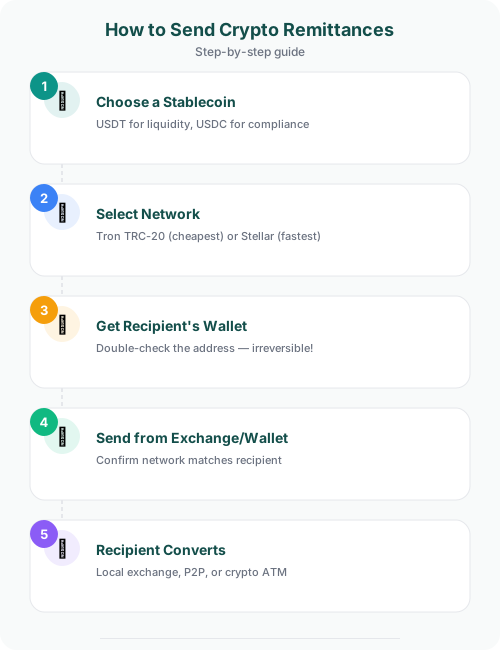
- Choose your stablecoin and network: USDT or USDC on BEP-20, Polygon, or Arbitrum networks for the lowest fees
- Buy on a low-fee exchange: Binance, Bybit, or MEXC offer 0.1% or less trading fees
- Get the recipient’s wallet address: They need a wallet that supports the same network (e.g., Trust Wallet, MetaMask, or a local exchange app like Coins.ph)
- Withdraw to their wallet: Double-check the network matches — sending on the wrong network means permanent loss
- Recipient converts to local currency: Via P2P sell on their local exchange, or through a service like Coins.ph (Philippines) or Bitso (Mexico)
Critical warning: Always send a small test amount first ($5-10). Verify the recipient received it before sending the full amount. I’ve seen people lose hundreds by sending to the wrong network.
The Stablecoin Revolution in Remittances
Stablecoins are rapidly becoming the backbone of crypto remittances:
- Stablecoin market cap: Crossed $300 billion in early 2026
- USDT + USDC: Account for 93% of the stablecoin market
- Latin America: Stablecoin transaction volumes surged 89% year-over-year to $324 billion in 2025
- Blockchain-based remittances: Estimated at 3-5% of global remittance flows (2025), growing rapidly
- IMF recognition: Published a December 2025 paper on “How Stablecoins Can Improve Payments and Global Finance”
The IMF’s endorsement signals a shift: stablecoins are being taken seriously as payment infrastructure, not just speculative assets.
Frequently Asked Questions
Is it legal to send cryptocurrency as a remittance?
In most countries, yes. Cryptocurrency itself is legal in the majority of nations. However, tax obligations apply — you may need to report gains, and some countries classify stablecoin transfers as foreign exchange transactions (notably Brazil since February 2026). Always check local regulations for both the sending and receiving country.
What’s the cheapest way to send money internationally right now?
It depends on the corridor. For US → Nigeria, MoneyGram online (debit card) charges just $0.02 on a $200 transfer. For US → Mexico, Bitso’s crypto rails are highly competitive at under 1%. For Russia → CIS, crypto via TON/Telegram is often the only practical option due to sanctions. There is no single cheapest method for all corridors.
Are stablecoins like USDT safe for remittances?
USDT (Tether) and USDC (Circle) have processed trillions of dollars in transfers and maintain their $1 peg consistently. The main risks are: sending on the wrong network (irreversible), P2P counterparty fraud (use escrow platforms), and regulatory changes. USDC is generally considered more transparent due to Circle’s regular audits.
What if my recipient doesn’t have a crypto wallet?
Several solutions exist: MoneyGram’s partnership with Stellar allows crypto-to-cash conversion at 81,000+ locations worldwide. Strike’s Send Globally service converts Lightning payments to local bank deposits in Africa. In the Philippines, Coins.ph and GCash make crypto-to-fiat conversion simple. For the least technical option, send via a traditional service.
How much can I save using crypto vs Western Union?
For a $500 monthly transfer to the Philippines, switching from Western Union agent ($22.30/month) to crypto via Coins.ph (~$5-8/month) saves approximately $170-200 per year. For US → Nigeria, savings are smaller because traditional digital services are already very cheap for this corridor. Your actual savings depend on the specific corridor, amount, and how you convert to local currency.
Continue Learning
- What Is Cryptocurrency? A Beginner’s Complete Guide
- Crypto Wallet Guide: How to Store Digital Assets Safely
- What Are Stablecoins? Understanding Digital Dollars
- How Blockchain Works: The Technology Behind Crypto
- Cryptocurrency Security: How to Protect Your Digital Assets
- Stablecoin Savings Guide: Protect Your Money from Inflation
- P2P Crypto Trading Safety Guide: How to Buy and Sell Safely
Disclaimer: This article is for educational purposes only and does not constitute financial advice. In my testing, USDT on Tron has consistently offered the lowest fees for transfers to Southeast Asia. Remittance costs vary by provider, amount, payment method, and market conditions. P2P exchange rates fluctuate and may differ significantly from estimates shown here. Always verify current fees before making transfers. Cryptocurrency transactions are irreversible — send test amounts first. Check local regulations regarding cryptocurrency use for cross-border transfers in both sending and receiving countries.
Data sources: World Bank Remittance Prices Worldwide (Q3 2025), exchange fee schedules (verified March 2026), Chainalysis 2025 Global Crypto Adoption Index, IMF Stablecoin Research (Dec 2025).